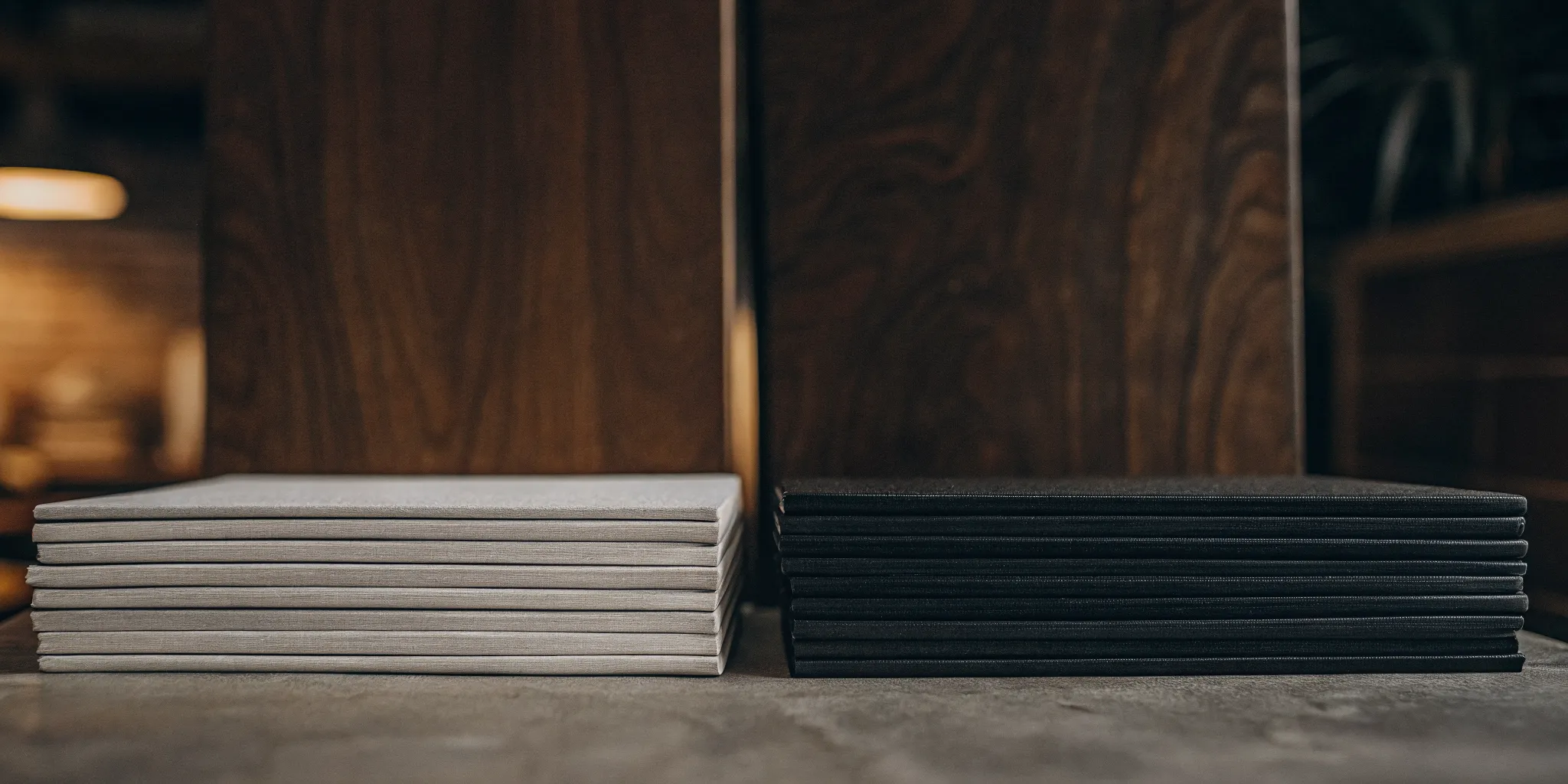
There’s nothing more frustrating than investing in a beautifully printed display, only to have it get dented during transport or warp after a day in a humid room. Trust me, I’ve seen it happen. While it’s easy to blame rough handling, the real problem often lies with the material it was printed on. The durability of your final product is decided before it even goes to print. This is why understanding the Gator Board Foam Core comparison is so critical. Choosing the right one from the start ensures your project looks professional and actually holds up to the job.
Key Takeaways
- Invest in durability for repeated use: Gator Board is built to last, making it the smart choice for recurring events like trade shows or for permanent signage. Opt for Foam Core when you need a cost-effective solution for a single presentation or a short-term promotion.
- Assess your display’s environment: Gator Board’s water-resistant surface makes it a reliable option for areas with fluctuating humidity. Foam Core is strictly for indoor, climate-controlled spaces, as moisture can quickly cause it to warp and bubble.
- Match the material to its handling needs: Choose Gator Board for a rigid, professional finish that withstands frequent handling and transport. For projects that require easy, lightweight setup and minimal movement, Foam Core is the ideal, easy-to-manage material.
Gator Board vs. Foam Core: What’s the Real Difference?
When you’re planning a presentation, setting up a trade show booth, or creating in-store signage, the material you print on is just as important as the design itself. Two of the most common choices are Gator Board and Foam Core. While they might look similar at first glance, they have distinct differences in durability, use, and cost. Understanding these differences will help you pick the perfect material for your project and get the results you want. Let’s break down what makes each one unique.
What Exactly Is Gator Board?
Think of Gator Board as the heavy-duty option. It’s constructed with a dense inner core of polystyrene foam, which is then encased between two layers of a hard, wood-fiber veneer. This composition makes it incredibly rigid and strong. Unlike other materials, Gator Board resists bending, warping, and denting, so it can handle being transported and displayed multiple times. Its outer surface is also water-resistant, which gives it an edge in durability. This strength makes it a fantastic choice for high-quality, long-lasting wide format prints that need to look professional for a long time.
Material Composition: Luxcell Veneer and Polystyrene Core
So, what gives Gator Board its signature strength? It’s all in the construction. At its heart is a dense core of polystyrene foam, but what sets it apart is what’s on the outside. This foam core is sandwiched between two layers of a special wood-fiber veneer known as Luxcell. This outer shell is incredibly hard and provides the board with its stiffness, keeping it from bending or bowing. This unique combination of a lightweight foam center and a tough, rigid exterior is what makes Gator Board so durable and resistant to the dents and dings that can ruin other materials.
How It Compares to Wood
You might think solid wood is the strongest option, but Gator Board often proves to be a more practical and reliable choice. While wood is heavy and can warp or swell with changes in humidity, Gator Board’s unique composition gives it superior rigidity without the weight. It’s engineered to resist bending and denting, making it a more dependable material for projects that need to look sharp and professional through repeated use. This makes it an excellent choice for portable displays, like those used at trade shows, where signs are constantly being set up, taken down, and transported.
And What Is Foam Core?
Foam Core, on the other hand, is a lighter and more budget-friendly material. It consists of a Styrofoam center sandwiched between two sheets of paper. Because it’s so lightweight and easy to cut, it’s a popular choice for temporary displays, school projects, and one-time event signage. If you need something for a single presentation or a short-term promotion, Foam Core is a simple and effective solution. However, it’s much more susceptible to damage. It can easily dent with light pressure and is very sensitive to moisture and humidity, which can cause it to warp.
Is Foam Core the Same as Foam Board?
You’ll often hear the terms “foam core” and “foam board” used interchangeably, and for the most part, that’s okay. “Foam board” is the general category for any board with a foam center. However, “foam core” specifically refers to the most common type: a lightweight styrofoam sheet sandwiched between two pieces of paper. So, while all foam core is a type of foam board, not all foam board is foam core. Gator Board, for instance, is also a type of foam board, but its wood-fiber veneer makes it a completely different product. Knowing this little distinction helps you be more precise when you’re ready to order prints, ensuring you get exactly the material you need for your project.
Understanding Foam Board “Memory”
Another key property to consider is “memory.” This refers to the foam’s ability to return to its original shape after being compressed. Some foam boards, particularly standard foam core, have little to no memory. When you press into them, the dent is there to stay. This is why they are so prone to damage during handling. On the other hand, denser materials like Gator Board have excellent memory. The rigid core resists compression and springs back, which is why it’s so much more durable. For any signage that will be moved around, like materials for trade shows, choosing a board with memory is essential to keep it looking sharp and professional use after use.
How Do They Compare Side-by-Side?
So, how do you decide between them? It really comes down to your project’s specific needs. Gator Board is the clear winner for durability; it’s tough, resists damage, and is built to last. Foam Core is much more delicate and can bend or dent quite easily. If your budget is tight and you only need a temporary display, Foam Core is a great, cost-effective choice. For high-quality, long-term displays that need to withstand handling and transport, like professional trade show materials, investing in Gator Board is the smarter move.
Exploring Your Options: Sizes, Colors, and Finishes
Once you’ve settled on Gator Board for its durability, the next step is to tailor it to your project. Gator Board isn’t a one-size-fits-all solution; it comes in various thicknesses, sizes, and finishes. These options allow you to customize your display for the perfect balance of rigidity, appearance, and function. Whether you need a massive, sturdy sign for a trade show or a sleek, custom-cut piece for your office lobby, understanding these choices is key to bringing your vision to life. Let’s look at the different specifications you can choose from.
Available Thicknesses and Sizes
The physical dimensions of your Gator Board play a huge role in its performance and visual impact. The thickness you choose affects its rigidity and weight, while the size determines how it fits into your display space. A thicker board will be more substantial and less likely to flex, making it ideal for larger, freestanding signs. Meanwhile, the ability to get custom sizing means you’re not limited to standard poster dimensions. You can create a sign that fits perfectly above a doorway, within a specific retail fixture, or as part of a modular display for a trade show.
Common Thicknesses
Gator Board is typically available in a range of thicknesses, commonly from 3/16 inch up to 2 inches. The most popular choices, like 3/16″ and 1/2″, offer a great balance of sturdiness and manageable weight for most applications, such as wall-mounted signs and presentation graphics. Thicker options, like 1″ or 2″, provide exceptional rigidity. These are perfect for creating structural, three-dimensional displays or large-scale signage that needs to support its own weight without any bowing or flexing over time. Choosing the right thickness ensures your sign has the structural integrity it needs.
Standard and Custom Cut Sizes
While you can find Gator Board in standard sizes, its real strength lies in customization. Many professional printers can cut the board to any size you need, which is a game-changer for creating perfectly integrated displays. Imagine designing a sign that fits flawlessly into an alcove in your store or creating a series of panels that align perfectly for a large-scale mural. At Print It, we offer custom cutting for our wide format prints, so you can get the exact dimensions your project requires, ensuring a professional and seamless finish for everything from small counter signs to large backdrops.
Color and Finish Varieties
Beyond its structural properties, Gator Board also comes with different surface options that can affect both the final look and the production process. The standard board colors are typically black or white, which provides a clean, neutral background for your printed graphics. The color of the foam core itself is also usually black or white, which becomes visible at the edges of the board. This can be used as a design element, with a black edge creating a subtle, framed look for your artwork or signage. Some varieties also come with specialized finishes to make mounting easier.
Self-Adhesive “Peel and Stick” Options
For projects where you plan to mount your own prints, photos, or graphics, the self-adhesive Gator Board is an incredibly convenient option. This type of board comes with a “peel and stick” surface, featuring a permanent cold adhesive already applied. You simply peel off the protective liner and carefully apply your print. This eliminates the need for messy spray adhesives or complicated mounting equipment, ensuring a smooth, bubble-free application. It’s a fantastic choice for artists mounting their own fine art prints, businesses creating custom photo displays, or anyone who needs a quick and professional way to create a rigid display.
Durability Test: Gator Board vs. Foam Core
When you’re investing in printed materials, you want them to last. Durability is often the deciding factor between Gator Board and Foam Core, as they perform very differently under pressure. Think about where your sign or display will live and how long you need it to look its best. Will it be a permanent fixture in your office lobby, or a temporary sign for a weekend event? Answering this question will point you toward the right material.
Gator Board is the clear winner for strength and longevity. Its rigid construction is designed to withstand wear and tear, making it ideal for displays that need to stick around. Foam Core, on the other hand, is more delicate. It’s perfect for short-term projects where it will be handled carefully and kept away from potential hazards like moisture or high-traffic areas. The difference in their build directly impacts how they hold up over time, so let’s look at what sets them apart.
Why Gator Board Is Made to Last
Gator Board’s durability comes from its unique construction. It features a dense inner core of polystyrene foam, which is sandwiched between two layers of a wood-fiber veneer bonded with resin. This composition makes it incredibly rigid and resistant to bending or warping. Unlike Foam Core, Gator Board’s surface is much harder to dent or puncture, ensuring your custom signs maintain a smooth, professional appearance. Its outer layers also provide a degree of water resistance, so it won’t be ruined by a little humidity or an accidental splash, making it a reliable choice for long-term indoor displays.
Why Foam Core Dents and Warps
Foam Core is a much softer material by design. Its surface is essentially a layer of paper, which makes it very susceptible to dents, scratches, and punctures. If you’ve ever accidentally pressed your thumbnail into a piece of Foam Core, you know how easily it marks. This material is also sensitive to moisture and humidity, which can cause it to warp or bubble over time. While it’s not built for the long haul, Foam Core is an excellent, cost-effective option for one-time use, like presentations or temporary event signage that will be displayed for a short period and handled with care.
Which Board Is Easier to Handle?
The trade-off for Gator Board’s superior durability is its weight. It’s significantly heavier and more rigid than Foam Core, which can make it a bit more challenging to transport and hang. However, this heft also contributes to its stability, especially for larger, free-standing displays. Foam Core is the opposite; it’s incredibly lightweight and easy to handle. You can mount it on a wall with simple adhesive strips, making it perfect for projects where you need a quick and easy setup. If you plan on moving your display frequently, Foam Core’s portability is a major advantage.
When to Choose Gator Board vs. Foam Core
Deciding between gator board and foam core really comes down to what you need your project to do and how long you need it to last. Both are fantastic materials, but they shine in different situations. Think of it like choosing between a sturdy ceramic mug and a paper cup. One is built for daily use and longevity, while the other is perfect for a single, specific event. Let’s walk through the best applications for each so you can feel confident you’re picking the right material for your signs, presentations, or displays.
When Should You Use Gator Board?
Choose gator board when you need your project to look sharp and stand the test of time. Its dense polystyrene core makes it incredibly rigid and resistant to bending or warping. This makes it the perfect choice for displays that will be used repeatedly or need to travel, like materials for trade shows. If you’re creating high-end signage for your retail space, mounting artwork for a gallery, or preparing a presentation for an important client, gator board delivers a professional, lasting impression. Its durability means your investment pays off over the long run, keeping your visuals crisp and flat use after use.
When Is Foam Core the Right Choice?
Foam core is your go-to for temporary or short-term projects where budget and ease of use are top priorities. Because it’s so lightweight and affordable, it’s ideal for one-time event signage, academic presentations, or creating mockups for a design pitch. Think of signs for a weekend conference, visuals for a school science fair, or temporary displays in a pop-up shop. While it isn’t designed for long-term use, foam core is the perfect solution for a huge variety of marketing materials that need to make a big impact for a short period without stretching your budget.
Beyond Displays: Packaging and Picture Frame Backing
While we often talk about printing directly onto these boards, they also serve important roles behind the scenes. For instance, both are used as backing for picture frames. Foam core is a popular choice because it’s lightweight and stiff enough to keep artwork flat without adding much weight to the frame. However, if you’re framing something more valuable, like high-quality custom prints that you want to preserve, Gator Board provides much better protection against bending and environmental factors. Its rigidity also makes it a great material for creating custom protective packaging for shipping fragile items, ensuring everything from delicate prototypes to artwork arrives in perfect condition. It’s all about matching the material’s strength to the level of protection your item needs.
Can You Use Them Outdoors?
Your project’s environment is a major factor in this decision. Foam core is strictly an indoor material. Its paper surface is susceptible to moisture, and even high humidity can cause it to warp or peel over time. It’s perfect for climate-controlled spaces like offices, classrooms, and convention halls. Gator board, on the other hand, is much more resilient. Its exterior resists water, making it a far better choice for areas with fluctuating humidity or for short-term, sheltered outdoor use. While it’s not a permanent outdoor sign, it can handle the demands of a covered entryway or a busy retail floor much better than foam core, making it a more versatile option for wide format displays.
How Much Do Gator Board and Foam Core Cost?
When you’re planning a project, the budget is always a key consideration. It’s easy to look at the price tags of gator board and foam core and immediately lean toward the cheaper option. But the true cost isn’t just about the initial purchase price; it’s about finding the best value for your specific needs. A sign that needs to be replaced after one use might end up costing you more in the long run than a more durable option would have from the start.
Choosing between these two materials often comes down to balancing your budget with the project’s lifespan and purpose. Are you creating a one-time display for a weekend event, or are you designing a permanent sign for your office lobby? Understanding the cost differences, long-term value, and the factors that influence their prices will help you make a smart investment. Let’s break down what you can expect to spend and what you get for your money.
Why Is Gator Board More Expensive?
There’s no getting around it: gator board is significantly more expensive than foam core. If your primary concern is keeping initial costs as low as possible, foam core will almost always be the winner. It’s an incredibly cost-effective material, which makes it a fantastic choice for projects with tight budgets, temporary signage for sales events, or school presentations.
The higher price of gator board reflects its premium construction and durability. You’re paying for a product that is built to last much longer and withstand more handling. Think of it as the difference between a disposable plate and a ceramic one. Both serve a purpose, but one is designed for short-term convenience while the other is made for repeated use. Our wide format printing options can accommodate either choice, depending on your budget.
Which Offers Better Long-Term Value?
This is where the conversation shifts from price to value. Foam core is perfect for temporary use, but it’s not built for the long haul. If you need a sign for a single event or a short-term indoor promotion, its low cost provides excellent value. However, if you try to use a foam core sign for a permanent display, you’ll likely find yourself needing to replace it due to dents, warping, or peeling.
Gator board, on the other hand, offers superior long-term value for any display you intend to use repeatedly or for an extended period. While the upfront cost is higher, its resistance to damage means you won’t be spending money on replacements. For items like trade show displays, permanent retail signage, or professional art mounting, gator board is the more economical choice over time because it lasts.
What Factors Influence the Cost?
The price difference between gator board and foam core comes down to their core materials and manufacturing process. Foam core has a simple construction: a lightweight Styrofoam center bonded between two sheets of paper. This composition is easy and inexpensive to produce, which keeps the final cost low for consumers.
Gator board’s higher price is a direct result of its more complex and robust structure. It features a dense, rigid polystyrene foam core, but instead of paper, its outer surfaces are made of a wood-fiber veneer sealed with a water-resistant finish. This combination of materials makes it much stronger and more durable, but it also requires a more involved manufacturing process, which in turn increases the cost. You’re essentially paying for higher-grade materials that provide superior performance and longevity.
How Do They Hold Up to Moisture?
When you’re investing in printed materials, the last thing you want is for them to warp or bubble at the first sign of humidity. The environment where you plan to use your display plays a huge role in which material is the right fit. Moisture resistance is a key differentiator between Gator Board and Foam Core, and it directly impacts the lifespan and appearance of your project. Let’s look at how each one handles exposure to water and humidity.
How Gator Board Resists Moisture
Gator Board is designed to be tough. Its core is made of a dense polystyrene foam that is encased in a wood-fiber veneer. This outer layer is specially treated to be water-resistant, which is a game-changer for durability. This means if you’re setting up at an outdoor market or a busy event, you don’t have to panic about a sudden rain shower or a spilled drink. The board’s surface resists moisture, preventing it from seeping in and causing the material to bend or warp. This resilience makes it an excellent choice for wide format prints that need to look sharp and professional for a long time, regardless of the conditions.
Why Foam Core Doesn’t Like Water
On the other hand, Foam Core is much more sensitive to its environment. It consists of a foam center sandwiched between two layers of paper, and as you can imagine, paper and water don’t mix well. Exposure to moisture, or even just high humidity, can cause the paper to absorb water, leading to warping, bubbling, and peeling. This makes Foam Core a poor choice for outdoor applications or for long-term displays in areas that aren’t climate-controlled. It’s best suited for short-term, indoor projects where you can be sure it will stay dry. If your display gets damaged, you’ll find yourself needing to order reprints much sooner than you planned.
Which Board Prints Better?
The material you choose doesn’t just affect durability; it also impacts the final print quality. Gator Board’s rigid, smooth, and moisture-resistant surface provides a stable foundation for printing. Your images and text will look crisp and vibrant, and they’ll stay that way because the board itself won’t degrade. While Foam Core can produce a beautiful print initially, its vulnerability to moisture means that pristine look might not last. A warped or bubbled board can distort your graphics and make your display look unprofessional. For important trade show materials or permanent in-store signage, Gator Board is often worth the investment to ensure your brand always looks its best.
How to Choose the Right Board for Your Project
You understand the key differences, so now it’s time to decide. The best choice isn’t always the most expensive one; it’s the material that aligns with your goals, budget, and timeline. To figure this out, let’s walk through a few key considerations that will point you in the right direction.
3 Questions to Ask Before You Buy
Before you commit, ask yourself a few questions. What is the main purpose of your print? Is it for a one-day conference or a permanent piece of office decor? How long do you need it to last? Foam core is great for temporary projects, but it isn’t built for long-term use. Finally, where will it be displayed? Will it be handled frequently or sit untouched on a wall? Answering these questions will give you a clear picture of your needs and help you select a material that won’t let you down.
What’s the Goal of Your Display?
Your project’s goal is your most important guide. If you need a polished, professional look that can withstand some wear and tear, Gator board is your best bet. It’s much tougher than foam core, resisting the warping and denting that can happen with lighter materials. This makes it ideal for high-quality photo mounting or durable trade show displays. On the other hand, if your goal is a cost-effective sign for a short-term event like a weekend sale, foam core is a smart, economical choice that gets the job done without a big investment.
Permanent vs. Temporary: Which Do You Need?
The expected lifespan of your display is a major factor. Remember, foam core isn’t an inferior product; it’s just designed for temporary applications where it can shine. For anything more permanent, Gator board is the clear winner. Its rigid structure is far more stable, and its durable surface is less likely to get damaged over time. This makes it the go-to for long-term retail signage, restaurant menus, or any marketing materials that you plan to use again and again, ensuring your investment continues to look great.
Related Articles
- Foam board – Print It
- Easily Upload Designs for Your Foam board
- Coroplast – Print It
- Rigid
- Easily Upload Designs for Your Coroplast
Frequently Asked Questions
Is Gator Board really worth the extra cost? Think of it in terms of value over time. If you’re creating a sign or display that you plan to use for months, or one that will be handled frequently, then yes, Gator Board is absolutely worth it. Its durability means you won’t have to pay for replacements due to dents or warping. For a project you only plan to use once, like a sign for a weekend sale, the lower cost of Foam Core is the more practical choice.
Which material is better for a trade show display? For trade shows, I almost always recommend Gator Board. Your display materials will be packed, transported, and set up multiple times, and they need to withstand that process. Gator Board is tough enough to handle the wear and tear without getting damaged, so your booth will look sharp and professional. Foam Core is simply too fragile for that kind of repeated use and can easily get dented before the show even begins.
Can I use either of these materials for outdoor signs? Foam Core is strictly for indoor use. Its paper surface will absorb any moisture from rain or even high humidity, causing it to warp and peel. Gator Board is much more resilient due to its water-resistant surface, so it can work for short-term use in a sheltered outdoor area, like under a covered entryway. However, neither material is designed to be a permanent outdoor sign that’s fully exposed to the weather.
I just need something for a one-day presentation. Which should I choose? Foam Core is the perfect solution for this. It’s incredibly lightweight, easy to transport, and very budget-friendly, which makes it ideal for a single-use project. You’ll get a crisp, professional-looking print for your presentation without paying for the long-term durability that Gator Board offers.
How does the print quality compare between the two? Both materials can produce a beautiful, high-quality print when they first come off the press. The main difference is in how that print quality lasts. Gator Board’s super smooth and rigid surface provides a stable base that keeps your images looking flat and vibrant. While a print on Foam Core looks great initially, the board itself is prone to denting or warping, which can distort the image and make your display look less professional over time.
Tools and Accessories for Your Project
Once you’ve chosen your board, having the right accessories can make all the difference in how you finish and display your project. The right tools ensure clean, professional results, while display accessories help your sign stand up and get noticed. Whether you’re a DIY pro or just need a simple way to prop up your display, a few key items can streamline the process and give your final piece that polished look. Let’s go over a couple of essentials that are good to know about when working with these materials.
Specialized Cutters
If you plan on cutting your boards yourself, especially the tougher Gator Board, a standard utility knife might not give you the clean edge you want. For truly professional results, specialized tools like the Fletcher 3100 or FSC Cutter are designed to slice through foam and composite boards with precision. These cutters prevent the jagged edges or crushed foam that can happen with the wrong tool, ensuring every cut is straight and smooth. While you might not need to invest in one for a single project, it’s good to know what the pros use to get those perfect results.
Easel Backs for Displays
An easel back is a simple but brilliant accessory that allows your board to stand on its own. It’s essentially a cardboard stand that attaches to the back of your sign, propping it up at an angle for easy viewing. This is incredibly useful for countertop displays, check-in desks, or any tabletop presentation at a conference or event. They provide instant stability without the need for a separate stand or frame, making them a practical and cost-effective choice for many of our clients’ trade show needs.
Beyond Gator Board and Foam Core: Other Options to Consider
While Gator Board and Foam Core are two of the most popular choices for rigid displays, they are by no means the only options available. The world of printing materials is vast, with specialized boards designed for just about any application you can imagine. Maybe you need something that can withstand the elements for long-term outdoor use, or perhaps your project requires archival-quality materials for preservation. Understanding the alternatives can help you find the perfect match for your specific needs, ensuring your final product is not only beautiful but also perfectly suited for its purpose. At Print It, we work with a wide range of rigid materials, so let’s explore a few other boards you might want to consider.
Heavy-Duty Alternatives: Rynoboard and Ultra Board
If you thought Gator Board was tough, let me introduce you to its even more durable cousins: Rynoboard and Ultra Board. These materials are engineered for maximum strength and rigidity, making them an excellent choice for projects that demand extreme durability. Like Gator Board, they feature a dense foam core, but they are often constructed with even tougher outer layers. This makes them exceptionally resistant to warping, denting, and damage, even in high-traffic environments. If you’re creating a display that needs to last for years or will be subjected to significant wear and tear, these heavy-duty alternatives provide peace of mind and a long-lasting professional appearance.
Other Plastic Boards: PVC Sintra
When you need a versatile material that’s both lightweight and incredibly durable, PVC Sintra is an option worth looking into. Sintra is a brand name for a board made of polyvinyl chloride (PVC), and it’s a favorite for both indoor and outdoor signage. Its smooth, matte surface allows for high-quality, vibrant printing, and it’s resistant to moisture, chemicals, and scratches. This makes it a fantastic choice for everything from permanent retail displays to outdoor event signage. Because it’s so durable yet easy to work with, it’s a reliable material for a huge variety of wide format projects.
Eco-Friendly and Archival Choices
Sometimes, a project’s requirements go beyond just durability or cost. You might be focused on sustainability and want a material that’s kinder to the environment. Or, you could be working with fine art or historical documents that need to be preserved for generations. In these cases, specialized boards are available that cater to these specific needs. Choosing the right material is not just about how it looks today, but also about its long-term impact, whether that’s on the planet or on the piece it’s protecting. Let’s look at a couple of these unique options.
Biodegradable Boards
For those looking to make an environmentally conscious choice, biodegradable boards offer a sustainable alternative to traditional foam-based materials. These boards are designed to break down naturally over time, reducing their impact on landfills. While they may not offer the same level of long-term durability as their plastic counterparts, they are an excellent option for short-term projects, one-time events, or any situation where sustainability is a top priority. They allow you to create impactful displays while still aligning with your green initiatives, proving that you don’t have to sacrifice your values for your project.
Acid-Free Boards for Archival Use
When it comes to preserving valuable artwork, photographs, or important documents, the material you mount them on is critical. Standard boards contain acids that can cause paper and images to yellow and degrade over time. That’s where acid-free boards come in. These archival-quality materials are specifically manufactured to be chemically stable and free of the acids that cause damage. Using an acid-free board ensures that your treasured pieces are protected from deterioration, making it the only choice for professional framing, museum displays, and any project that requires long-term preservation and care.